Han River Park Service Redesign
1. The Problem: A Clunky Hub for Casual Users
The original Han River Park app functioned as a complex hub, forcing users through a time-consuming tree structure just to complete simple actions. Our research revealed that most visitors use the app infrequently (1-2 times a month or less) and are primarily first-time users. The existing design was unappealing, lacked continuity, and failed to serve this casual, broad demographic. Furthermore, users felt lost regarding events, facilities, and transportation. Many refused to download the app because they could find basic information on Naver or Google, highlighting the need for unique, standout features.
2. The Key Insight: Streamlining the Outdoor Experience
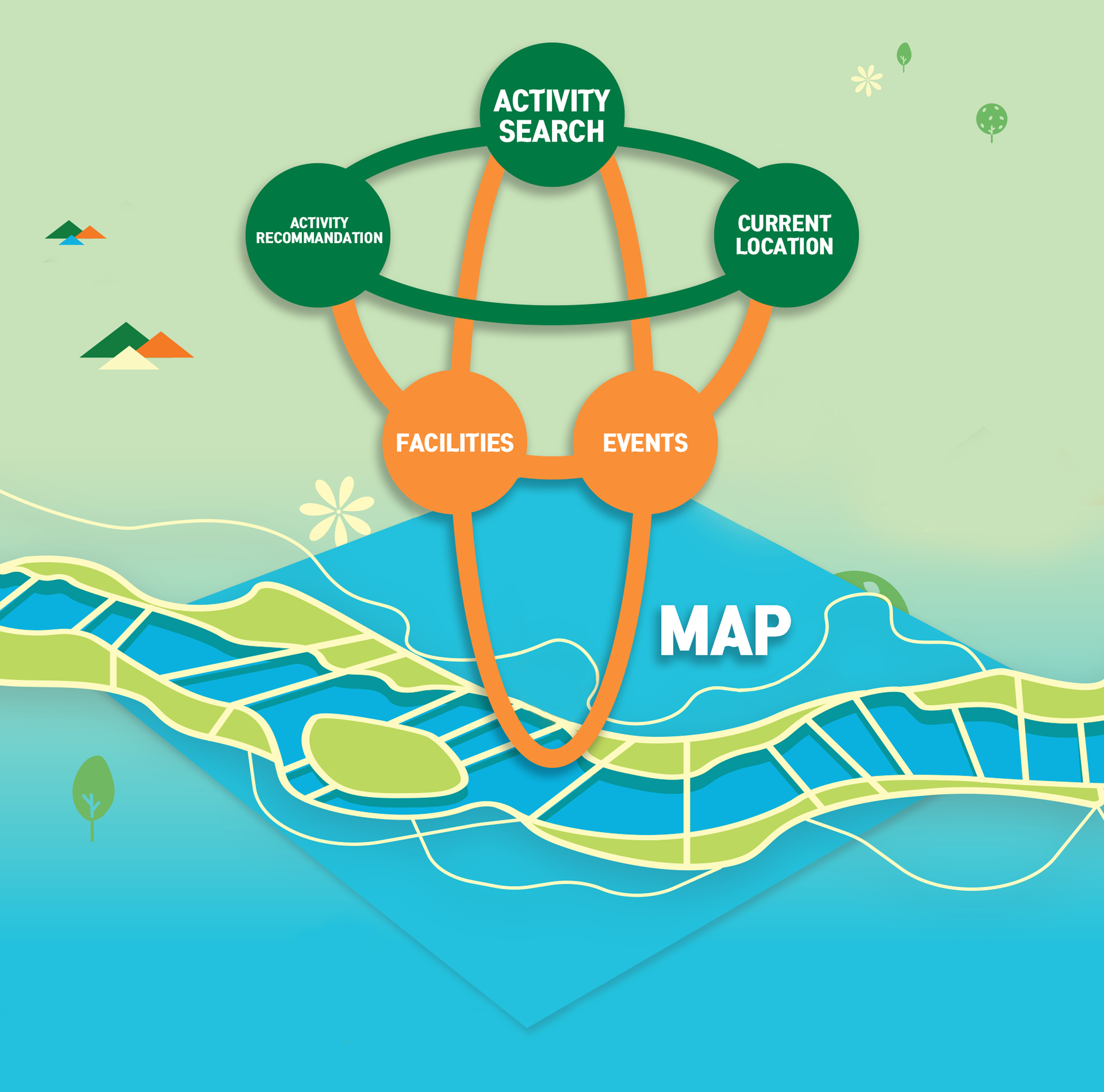
Through surveys and field research, we mapped out user experiences for popular activities (basketball, picnics, biking, events). We discovered that regardless of the activity, users consistently performed three core actions: checking the weather, finding facilities, and referencing a map. We realized that centralizing the experience around a dedicated Han River map—rather than a generic map like Naver—was crucial.
3. The Solution: A Map-Centric, Intuitive Interface
We abandoned the original tree structure and redesigned the app to prioritize the most frequent tasks.
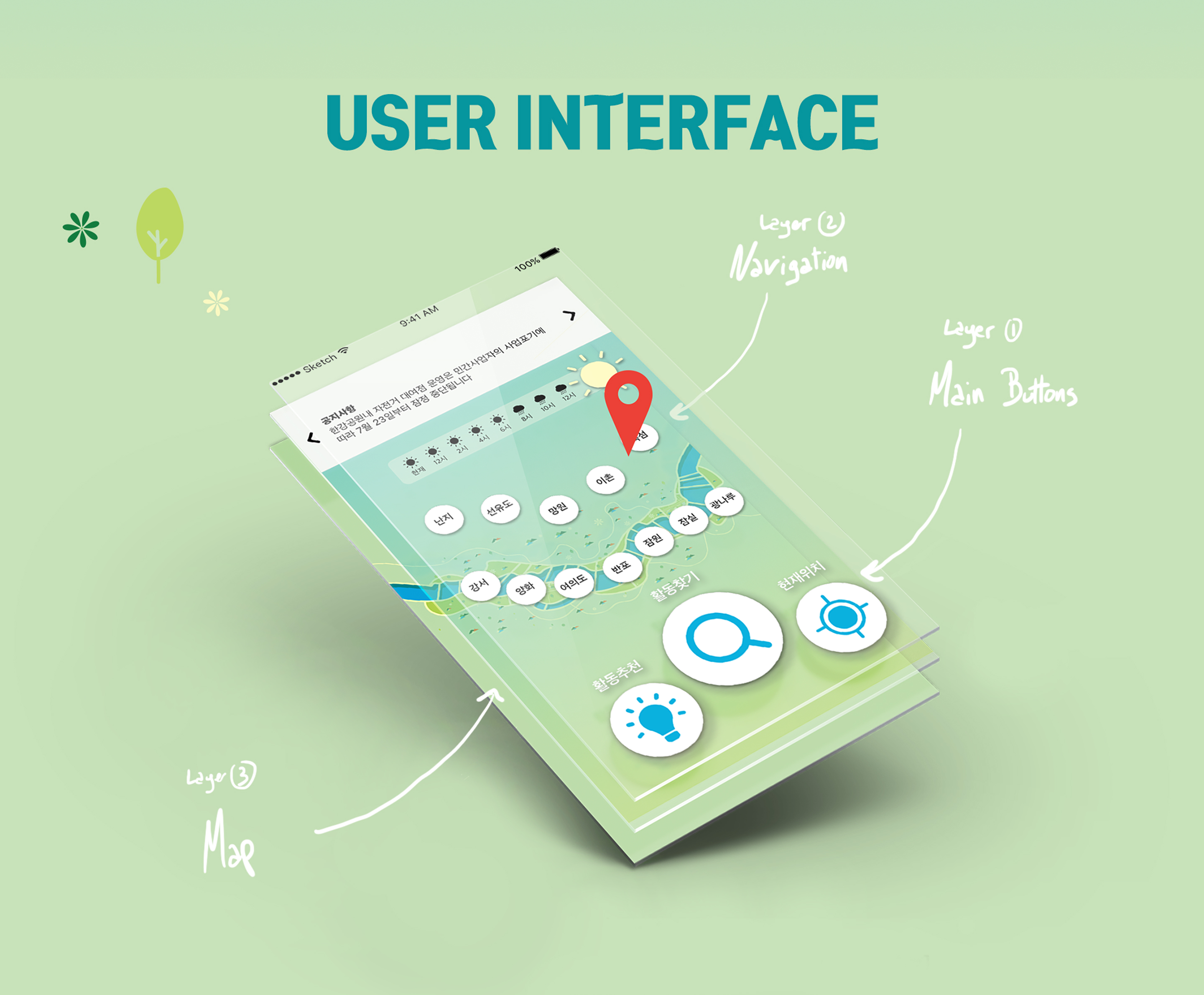
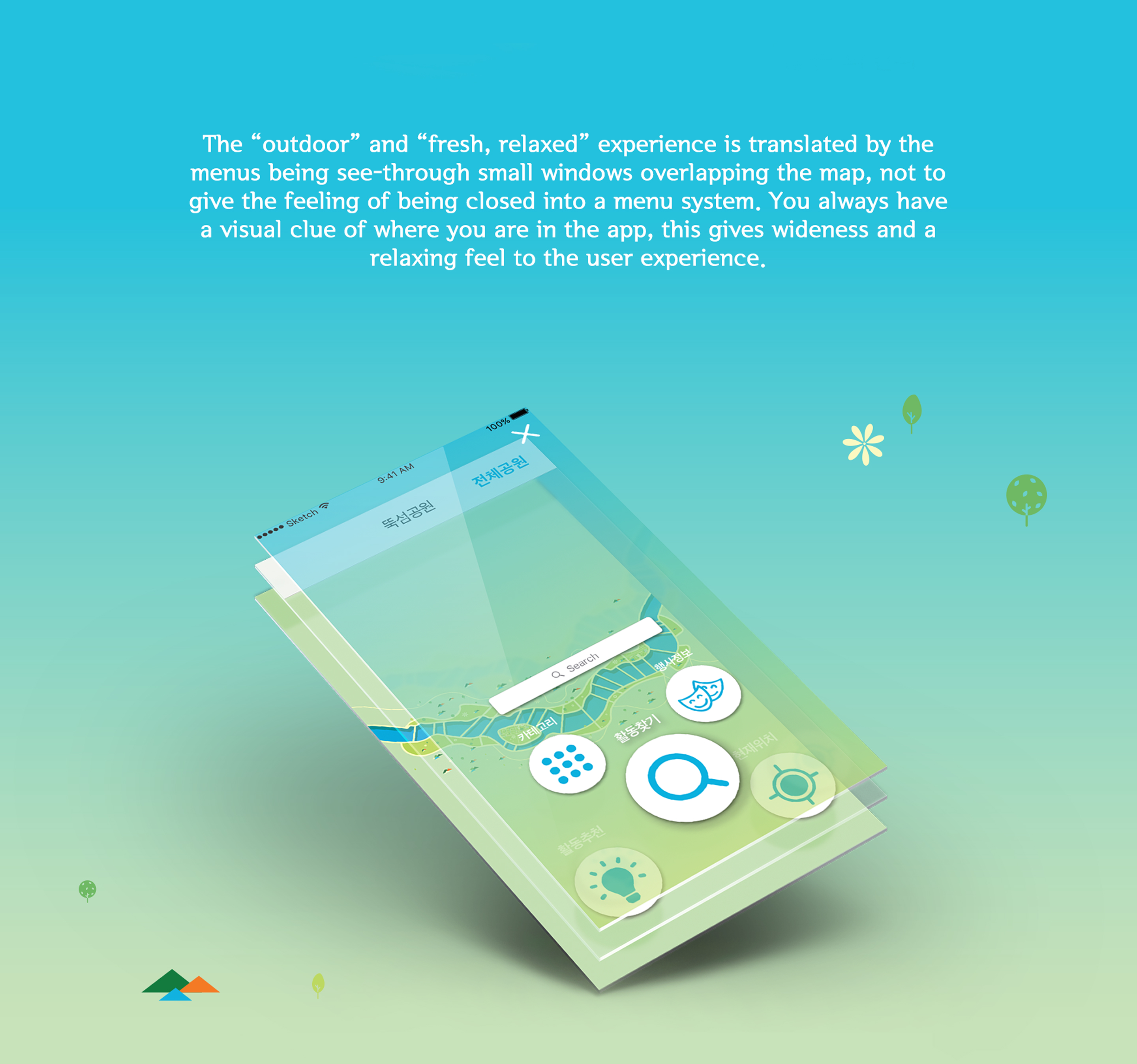
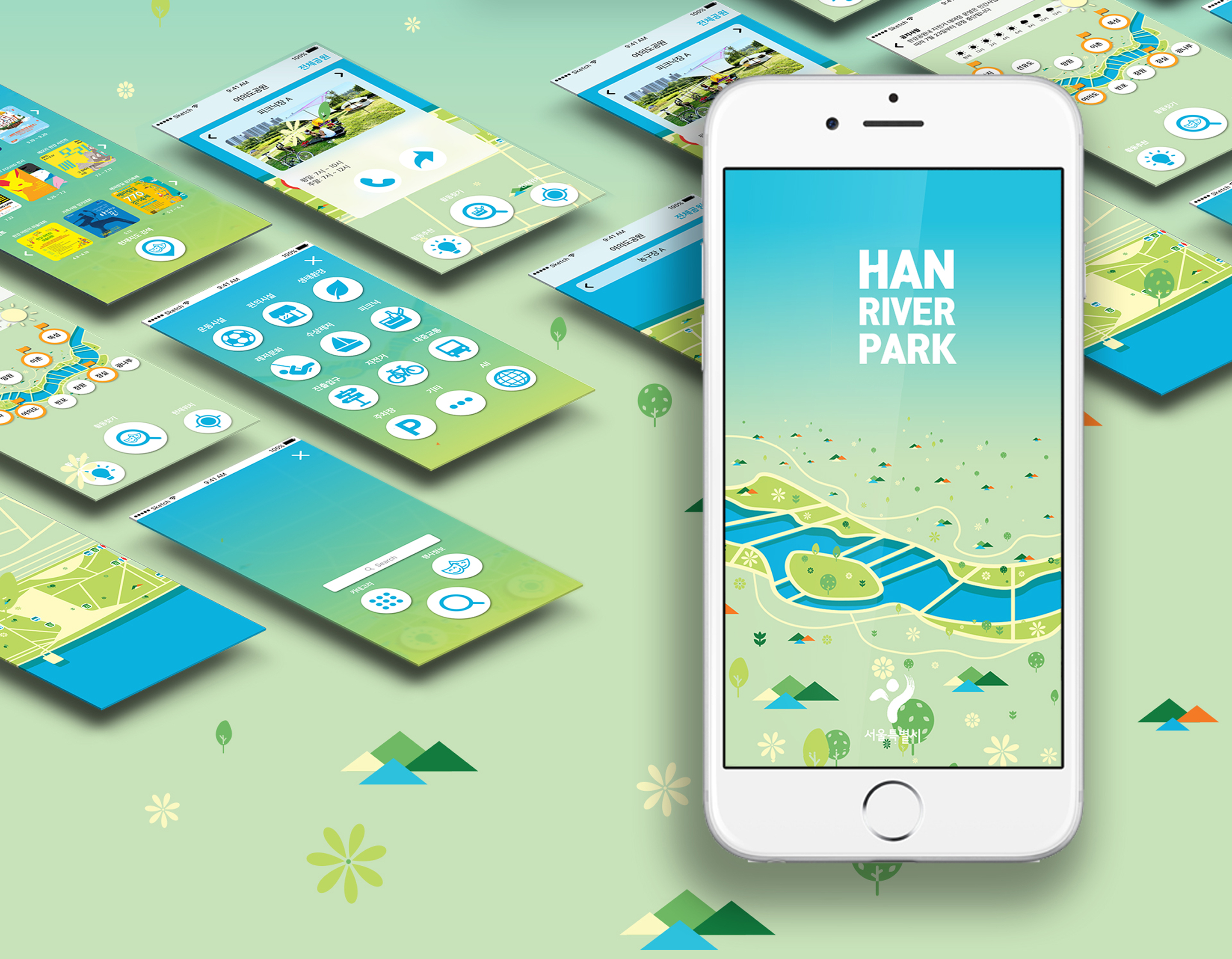
- Centralized Map Navigation: The home screen is now a dedicated Han River map, providing immediate access to three main action buttons: activity search, activity recommendation, and current location.
- Contextual Recommendations: To differentiate the app, we introduced a recommendation mode that uses current location and weather data to suggest activities.
- Optimized for the Outdoors: We designed large, thumb-reachable buttons positioned at the bottom of the screen to ensure ease of use outdoors, even in bright sunlight or when users are in a rush.
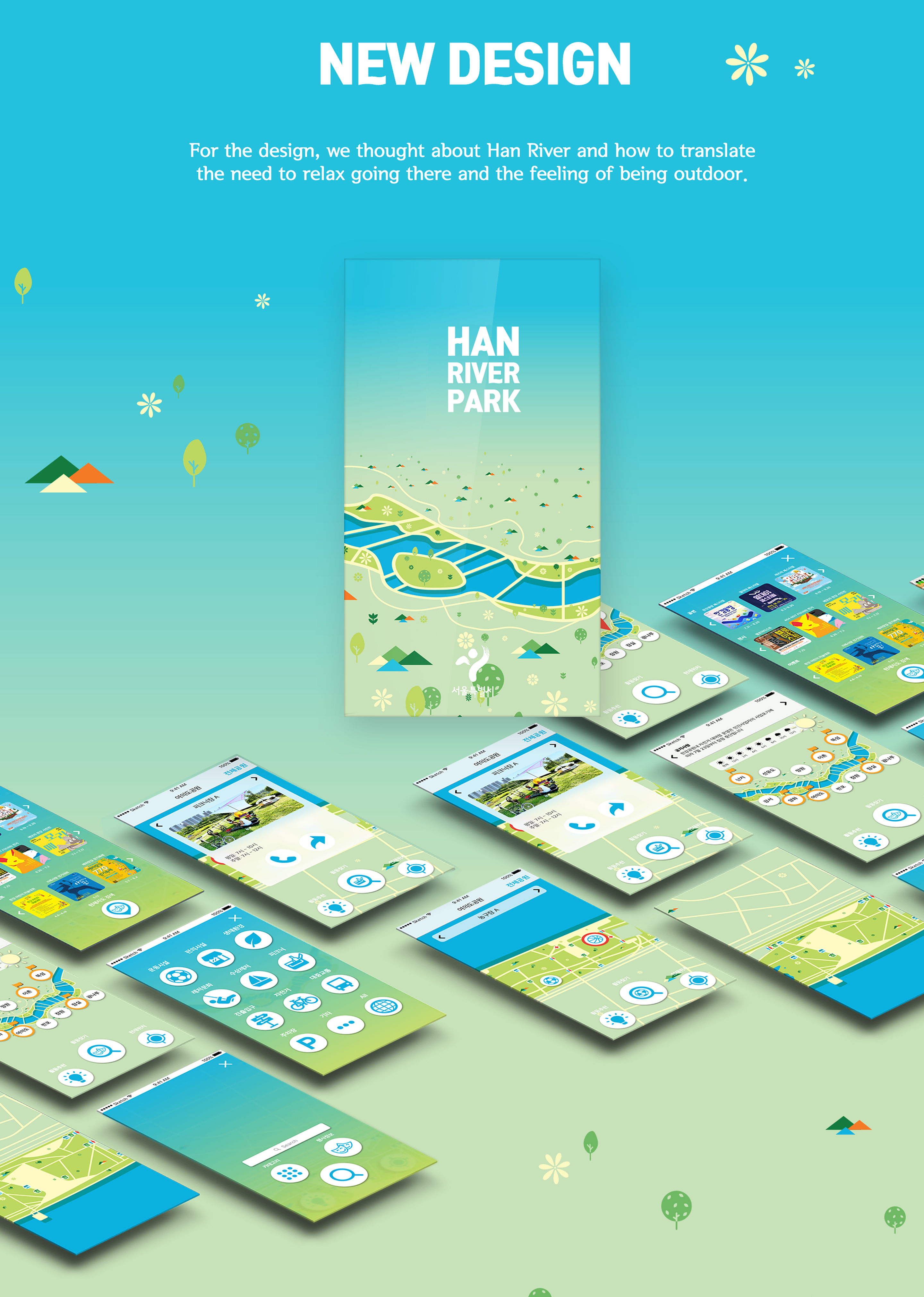
- Inviting Visual Design: We gave the map a "cartoonish, amusement park style" to evoke a fun, happy feeling. The color palette uses nature-inspired greens, blues, and oranges to bridge the gap between outdoor environments and modern OS styling (of the time in 2017).
4. Recognition
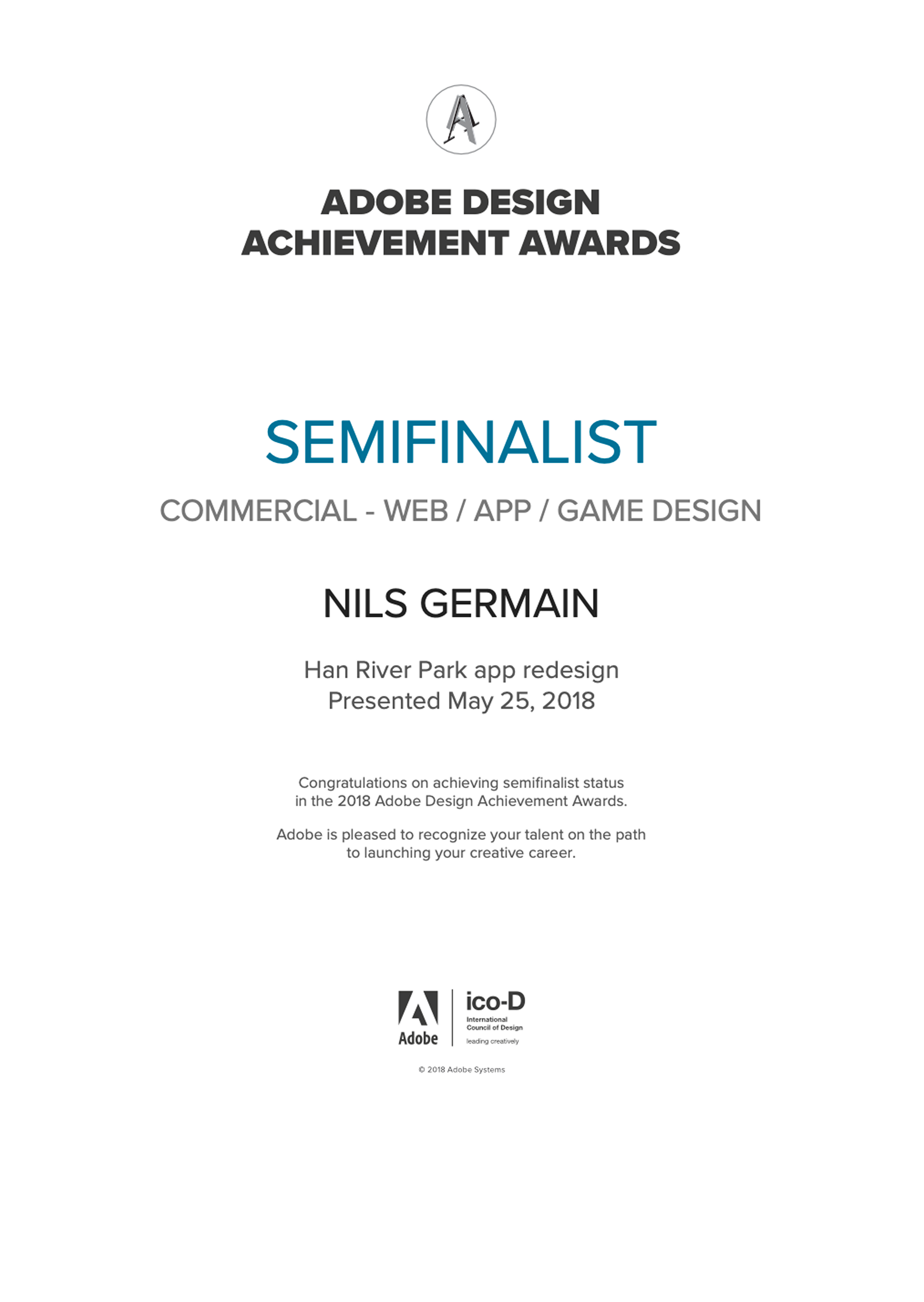
This project was recognized as a Semifinalist in the Commercial (Web / App / Game Design) category of the 2018 Adobe Design Achievement Awards.