Ddareungi Service Redesign
1. The Problem: A Complex Public Service
Seoul's bike-sharing service, Ddareungi, was introduced in October 2015 but remained overly complicated compared to similar systems in other global cities. Through user research, the team identified several critical friction points: the on-board device required a cumbersome password system, checking the map and rental timer while riding was physically dangerous, and a confusing reservation system caused frequent conflicts between users. The core challenge was working around the technical limitations of a public service while adapting it to the fast-paced lifestyle of Seoulites.
2. The Key Insights & The Pivot
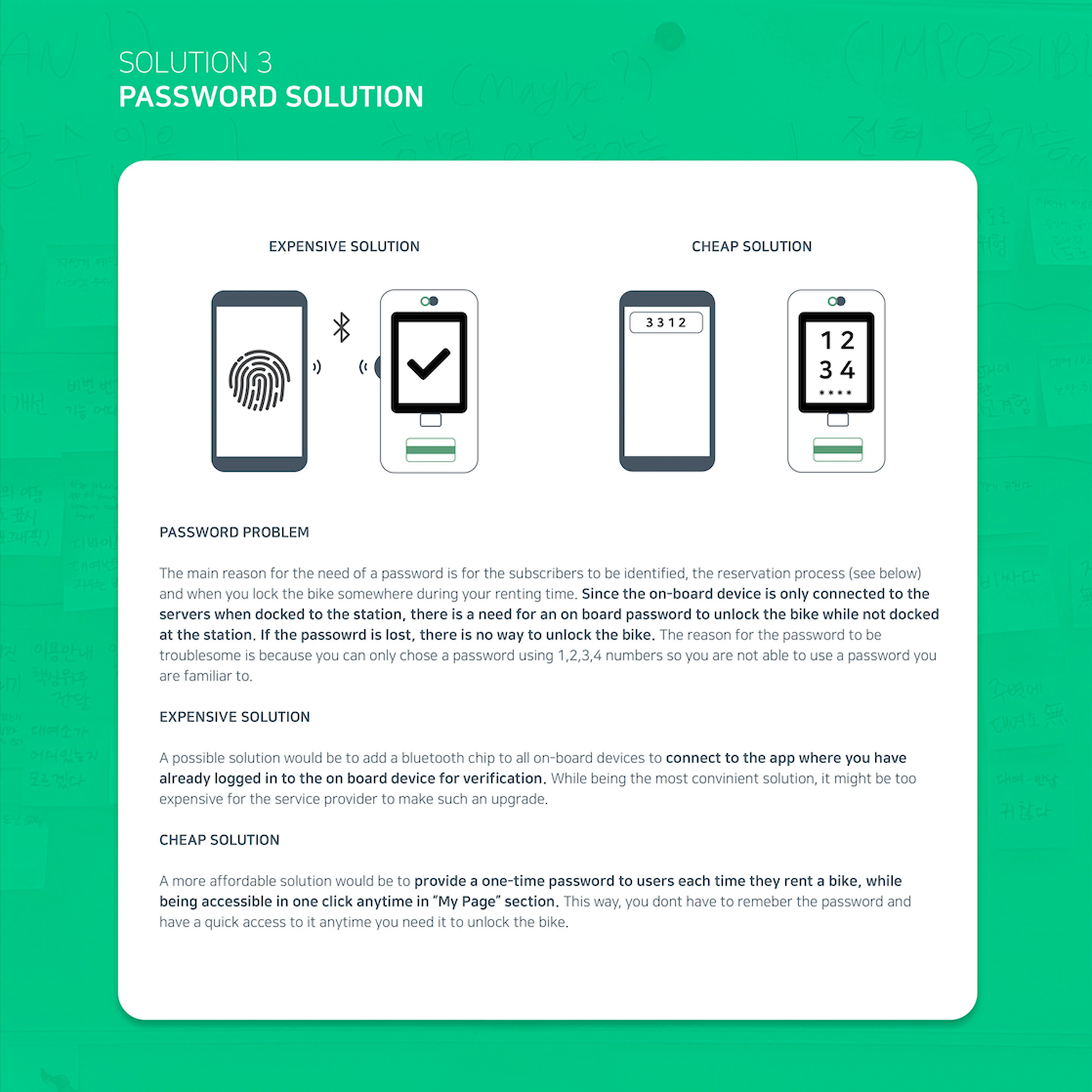
- The Hardware Constraint: The bikes' on-board devices only connected to the server when docked at a station. This forced users to rely on a confusing password system to unlock the bike, which left them stranded if the password was forgotten mid-ride.
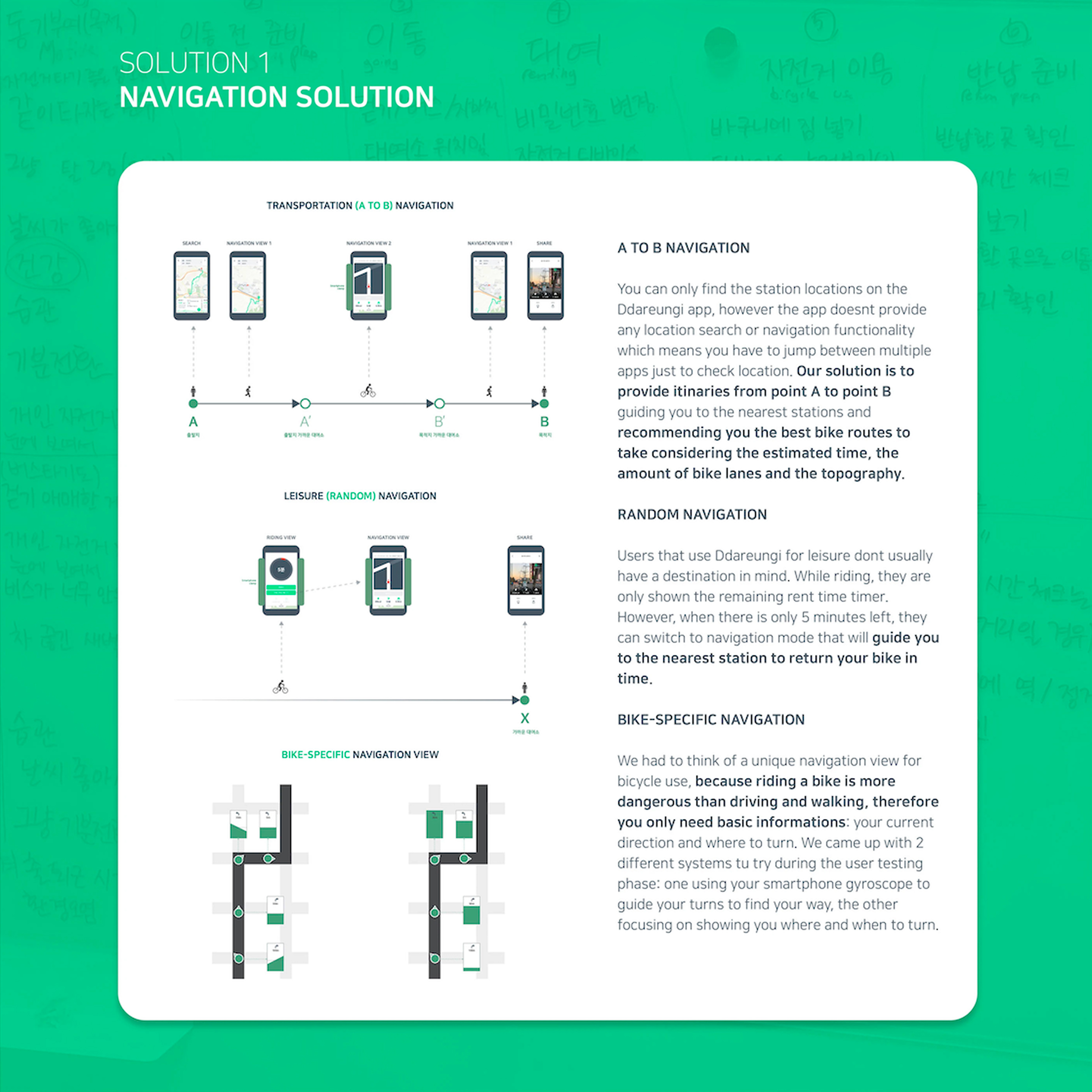
- The Navigation Danger: Riders were dangerously switching between the Ddareungi app and other map services while cycling just to find their way or check their remaining rental time.
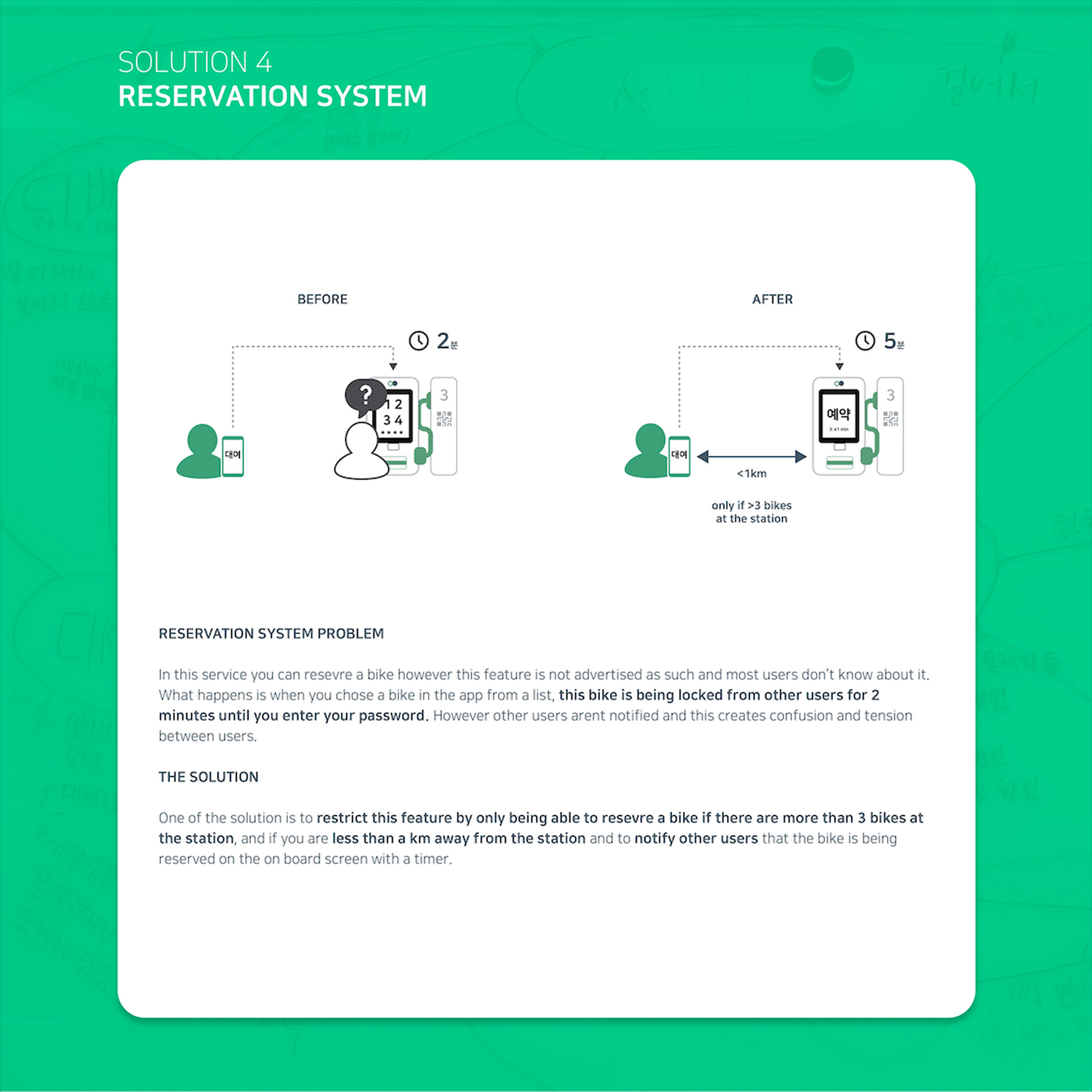
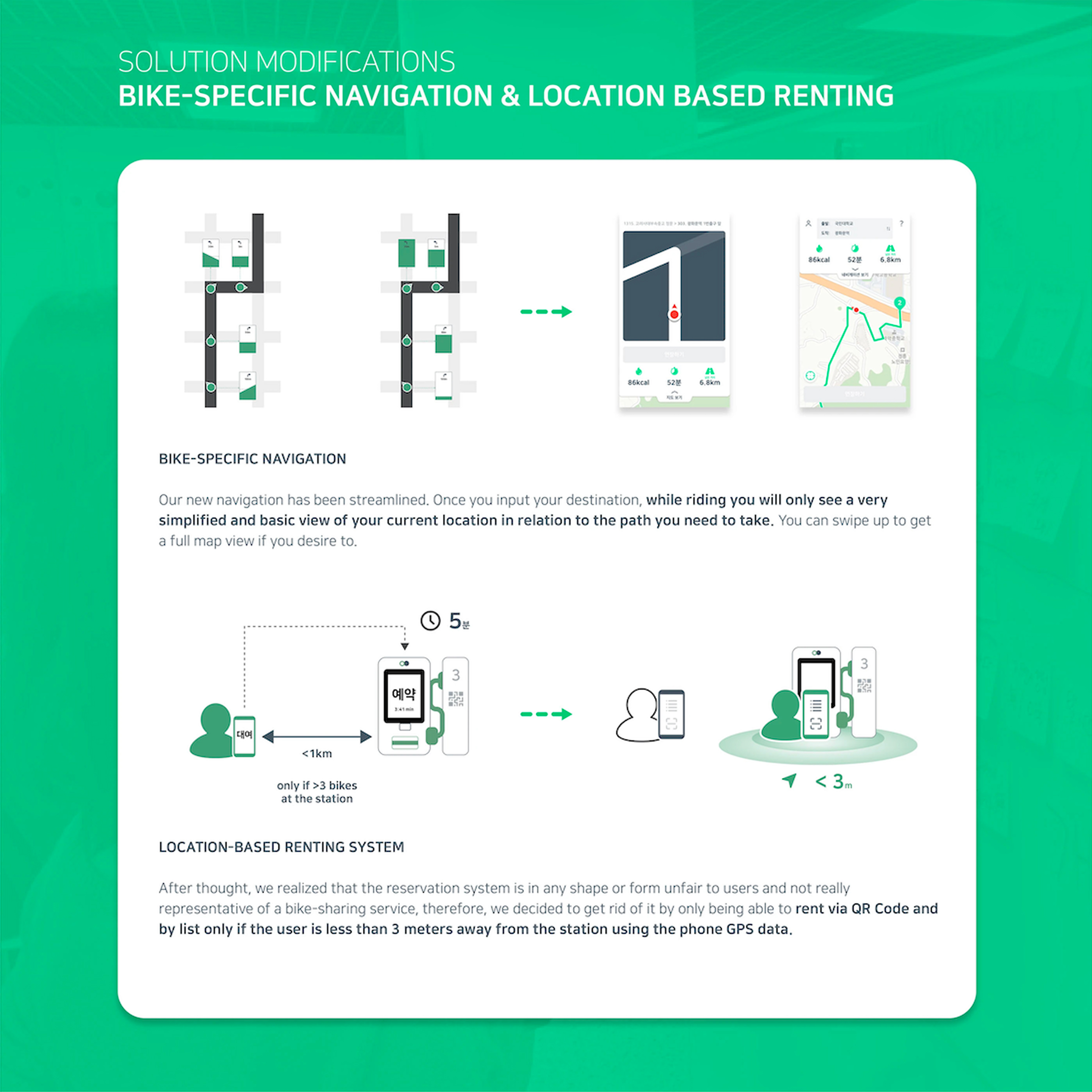
- The Reservation Pivot: The team initially tried fixing the confusing reservation system by adding proximity constraints (users had to be within 1km) and stock limits (requiring more than 5 bikes at the station). However, early user testing revealed this was still perceived as unfair and confusing. The team made the strategic decision to completely remove the reservation feature.
3. The Solutions & UI Decisions
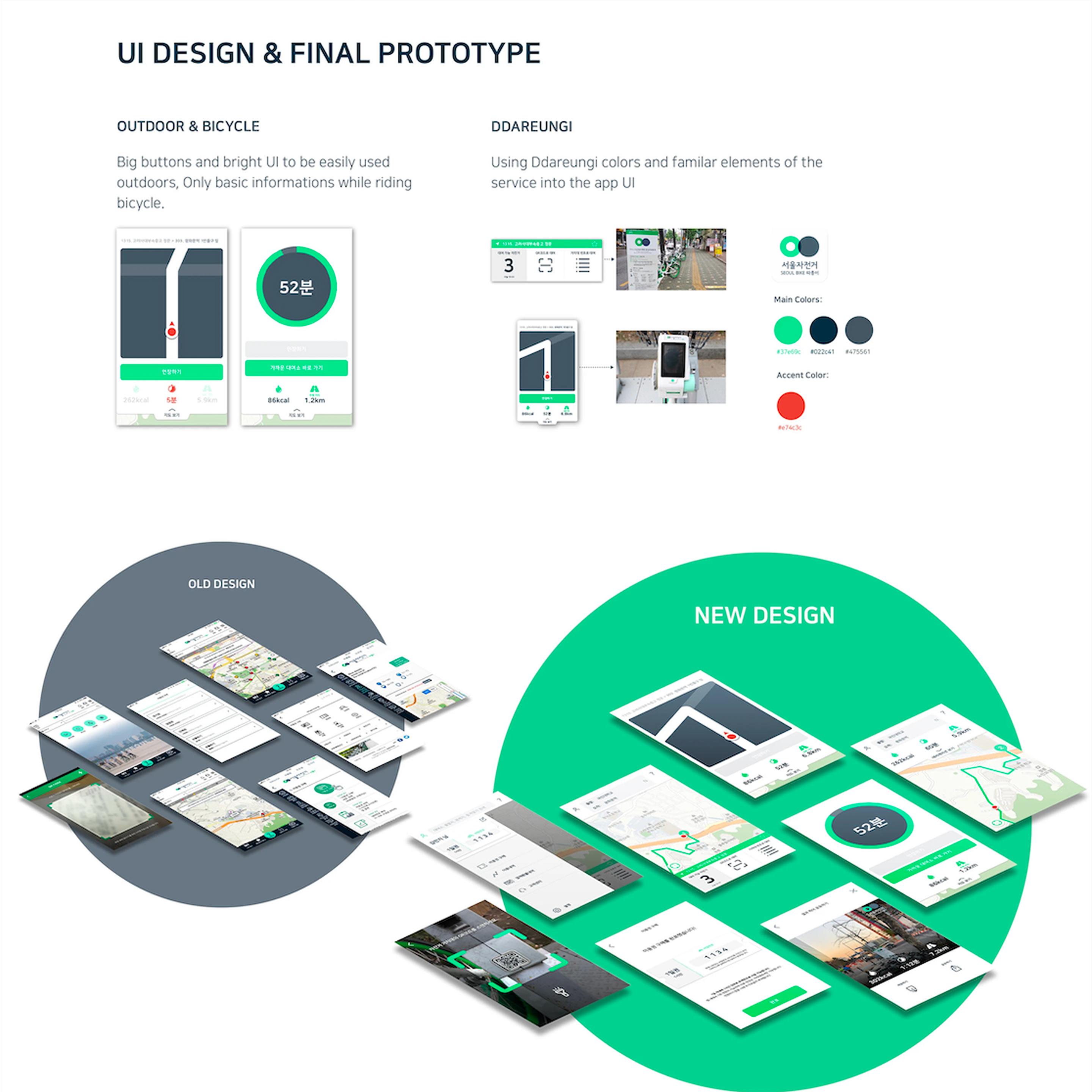
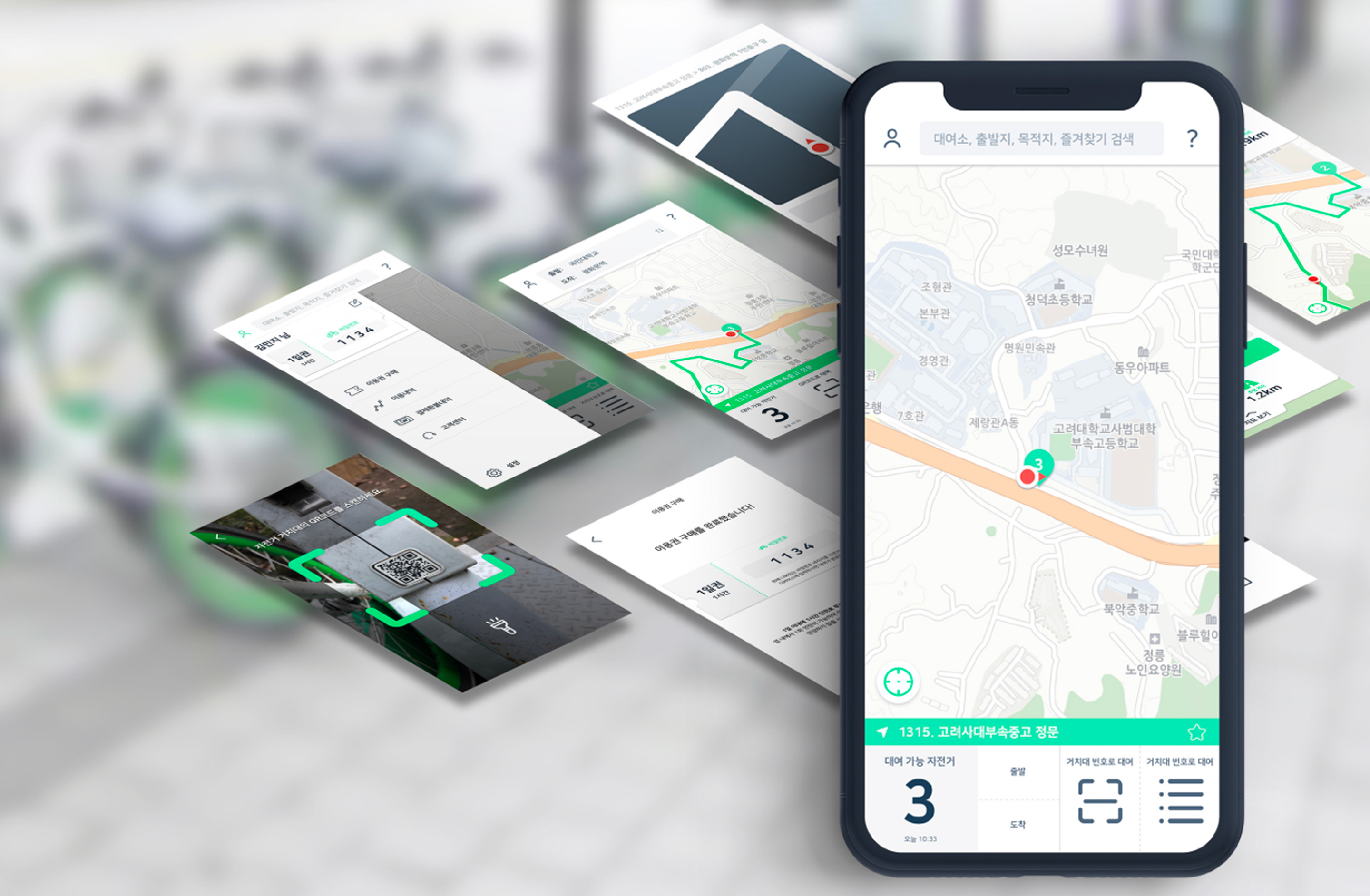
We abandoned the original tree structure and redesigned the app to prioritize the most frequent tasks.
- Location-Based Renting: The flawed reservation system was replaced with a strict proximity rule. Users can now only rent a bike via QR code or list if GPS verifies they are less than 3 meters away from the station.
- Bike-Specific Navigation: The team designed a simplified, low-distraction navigation view specifically for riding, allowing users to swipe up for the full map only when needed.
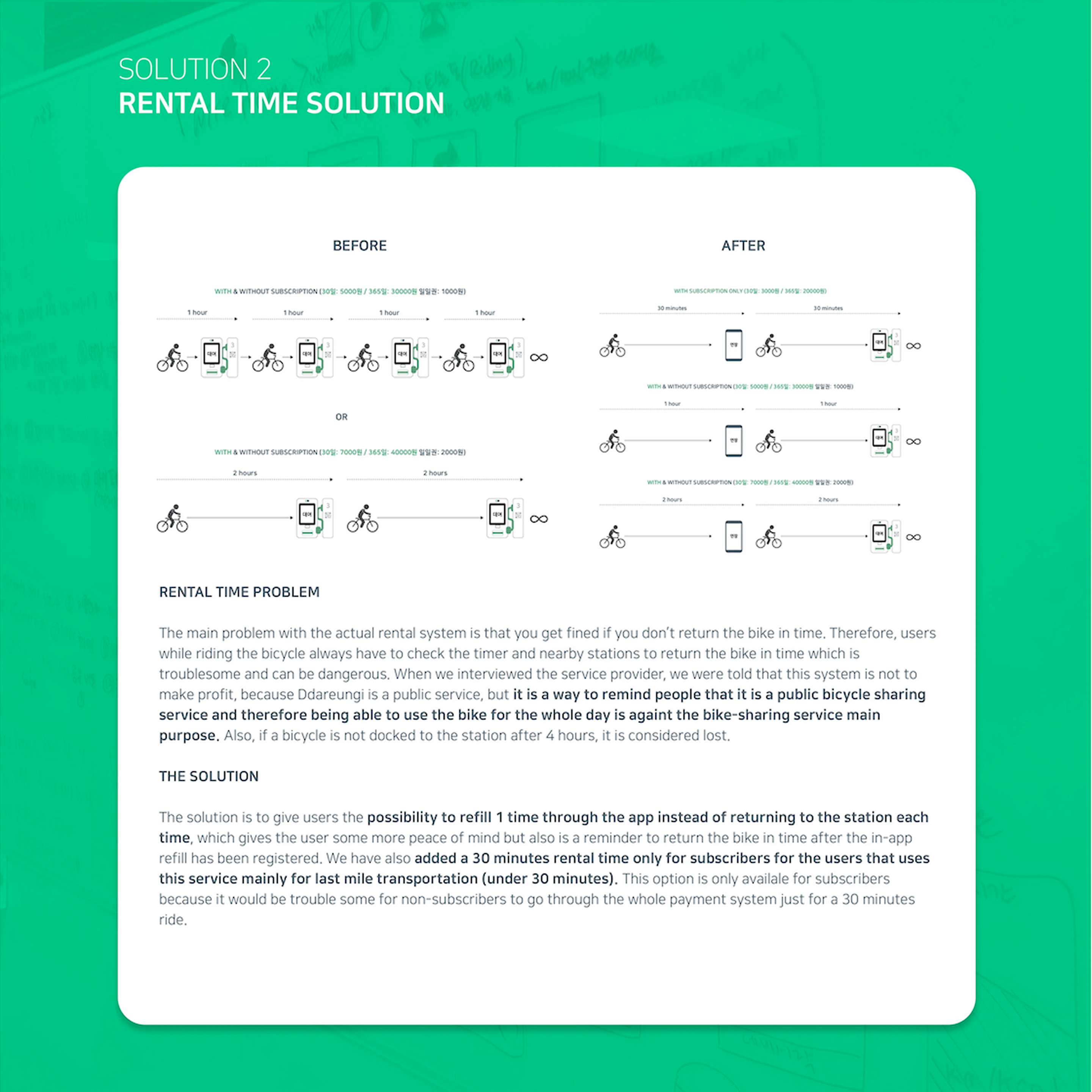
- In-App Time Extension: The redesign eliminated the frustrating requirement of physically returning to a station just to extend the rental time.
- Outdoor-Optimized UI: The final interface utilizes large buttons, bright layouts, and the recognizable Ddareungi green brand colors, ensuring the app is easily readable outdoors and while operating a bicycle.
4. The Outcome
By systematically removing broken features like remote reservations and simplifying the renting flow, the redesign bypassed technical hardware limitations and transformed a cumbersome public utility into a streamlined, user-friendly service tailored to navigating Seoul safely.